Health and Safety Policy for Movers Elephant And Castle
 This Health and Safety Policy sets out the standards expected from movers in Elephant and Castle and explains how safe working practices are maintained across every stage of a removal. The policy applies to domestic and commercial moves, storage handling, loading, unloading, and all related transport activity. Its purpose is to protect employees, customers, visitors, and the public from avoidable harm while ensuring each move is carried out efficiently and responsibly.
We recognise that moving work involves manual handling, vehicle movement, lifting equipment, fragile items, and time-sensitive operations. Because of this, safety must never be treated as secondary to speed. Every team member is expected to follow safe systems of work, use equipment correctly, and report anything that could create risk. This approach helps maintain consistent service quality and reduces the chance of injury, damage, or delay.
 All Elephant and Castle movers are required to take personal responsibility for health and safety. Managers must plan each job carefully, identify hazards in advance, and assign tasks based on capability and training. Staff must remain alert to changing conditions such as weather, crowded access routes, parking limitations, poor lighting, or unsafe items within the property. Where risk is identified, work must pause until it can be controlled.
Core Safety Principles
The following principles guide safe working across every removal:
- Risk assessment must be completed before work begins.
- Manual handling should be reduced through teamwork, tools, and careful planning.
- PPE such as gloves, safety footwear, and high-visibility clothing should be used when appropriate.
- Vehicles and equipment must be inspected before use and kept in safe condition.
- Communication must remain clear between crew members, drivers, and supervisors.
These standards are not optional. They are part of the everyday working method for removal teams in Elephant and Castle and support a professional service that places safety first.
 Particular attention must be given to lifting and carrying. Furniture, boxes, appliances, and awkward-shaped items can all cause strain if handled incorrectly. Staff should bend at the knees, keep loads close to the body, avoid twisting, and ask for help where weight, size, or shape creates concern. If an item is too heavy, too unstable, or too dangerous to move manually, the task should be re-evaluated and the proper equipment used.
Training, Equipment, and Site Awareness
All workers must receive training relevant to their duties. This includes safe lifting, load securing, handling fragile goods, route planning, incident reporting, and the correct use of trolleys, straps, blankets, and ramps. Refresher training should be provided when procedures change or when a risk pattern is identified. Training records should be retained as evidence of compliance and competence.
Equipment safety is equally important. Straps, covers, dollies, lift aids, and vehicle fixtures should be checked regularly for wear, damage, or malfunction. Faulty equipment must be removed from service immediately. Vehicles must be maintained in a roadworthy condition, and loads should be secured to prevent movement during transit. A well-maintained fleet is central to the safety of any moving company in Elephant and Castle.
The working environment must also be assessed carefully. Stairs, narrow hallways, low ceilings, uneven surfaces, wet floors, and obstructed entrances all increase the likelihood of incidents. Teams should take time to clear routes where possible and protect surfaces to reduce trip and slip hazards. When access is restricted, the move should be adapted to suit the conditions rather than forcing unsafe shortcuts.
Incident Reporting and Emergency Response
All incidents, near misses, injuries, and property damage must be reported promptly to a supervisor. Reporting helps identify patterns, improve controls, and prevent repetition. Even when no one is hurt, a near miss may reveal a weakness in procedure that needs immediate attention. Accurate reporting is part of a responsible safety culture.
In the event of an accident, the first priority is to make the area safe and provide assistance where needed. If emergency services are required, they must be contacted without delay. Staff should know the basic steps for responding to fire, collision, injury, and hazardous spillages. Any incident must then be recorded and reviewed so that lessons can be learned and actions tracked to completion.
Health and safety is a shared responsibility. Supervisors are expected to lead by example, and staff are expected to work in line with instructions, policies, and site-specific controls. Clients and building representatives may also be asked to support safe working by providing access details, warning of hazards, and keeping routes clear. Cooperation between all parties helps ensure that the move is completed with care.
Monitoring, Review, and Continuous Improvement
Safety performance should be monitored through regular inspections, staff briefings, and review of incident reports. Where problems are identified, corrective action should be taken quickly and recorded. This may include adjusting lift plans, improving supervision, replacing equipment, or updating training. A policy that is reviewed and improved regularly remains effective and relevant.
 Managers should also encourage staff to raise concerns without fear of blame. Open reporting supports early intervention and helps create a workplace where hazards are noticed before they become serious. Clear instructions, consistent standards, and fair enforcement all contribute to safer removals and better outcomes for everyone involved.
Ultimately, this policy reflects a commitment to professionalism, diligence, and care. Whether handling a small flat move or a complex office relocation, movers Elephant and Castle must apply the same standards of caution and respect for safety. Careful planning, proper training, and reliable equipment are the foundations of safe and efficient work.
Policy Commitment
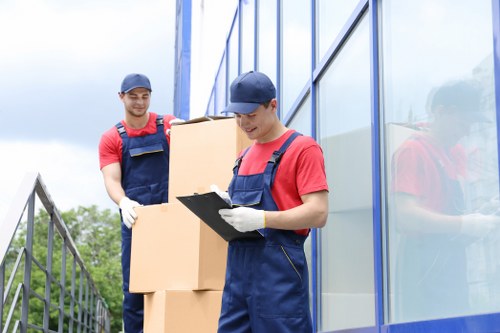 All personnel are expected to follow this policy at all times and to support a culture where safe practice is normal practice. By combining responsibility, communication, and attention to detail, the team can protect people, prevent avoidable disruption, and deliver a service that is both dependable and safe.